Using Steel Edging for Seamless Garden Transitions
Overlapping grass creeping into a garden bed is one of those things you stop seeing after a while. The edge softens, the mulch shifts, the line between lawn and planting disappears — and the whole yard starts to look vaguely unresolved without any single thing being obviously wrong.
Garden edging defines and holds that line. A clean, continuous edge between lawn and bed, path and planting, gravel and soil. Not just tidy — structurally contained. Grass roots stop where they’re supposed to. Mulch stays put. The shapes you’ve designed into the garden actually read as shapes.
How Steel Edging Changes a Garden’s Structure
Flexible plastic edging shifts. Timber rots, warps, and eventually sits half-buried at the wrong angle. Steel — particularly corten steel — does neither.
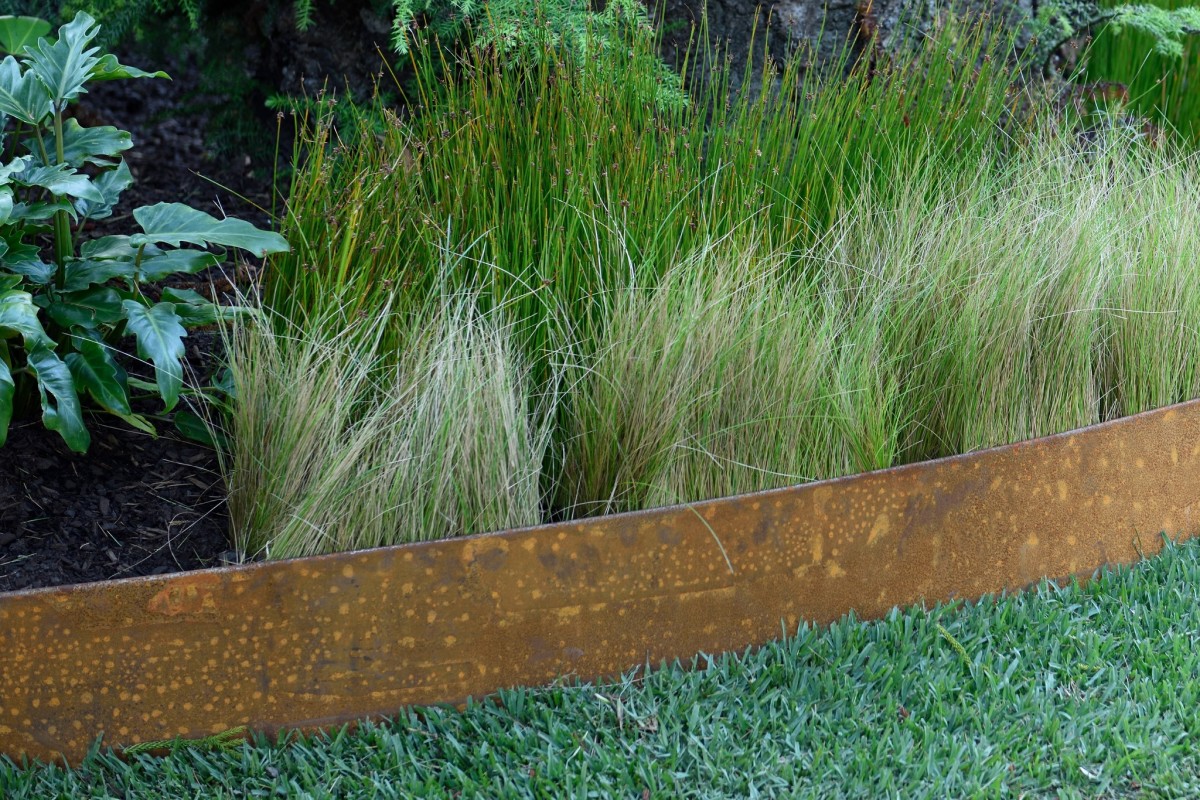
The material oxidises on the surface over the first few months, forming a tight rust-coloured patina that actually seals the steel underneath. That patina isn’t damage. Honestly, it’s the opposite — it’s what makes corten so well suited to outdoor use without paint or treatment. The colour it develops, a warm earthy rust, tends to age well against planting too.
Most steel edging sits with around 50mm visible above ground. Enough to read clearly, not so much that it competes with what’s growing behind it. The boundary just exists — which is exactly the point.
Corten or Galvanised — the Finish Shapes the Garden
Corten suits garden beds, feature borders, longer curved runs. The patina it develops sits naturally against soil, mulch, and planting — warm without being heavy. Galvanised reads cooler, cleaner, and tends to work better in more minimal or contemporary schemes.
Both hold curves without buckling, which is more than can be said for timber at any decent length. The choice between them isn’t really about performance. It’s about what the garden looks like — and that’s worth settling before the first stake goes in.
Why Smooth Transitions Are Harder Than They Look
The issue isn’t usually the edging material itself. It’s the transitions — where one surface type meets another, where a straight run turns a corner, where a path meets a bed border at an irregular angle.
Steel handles these reasonably well if the installation is done properly. The edging needs to be set into the ground consistently, with joins staked on both sides, and curves formed slowly rather than forced. Rushed installs show themselves within a season — the edging lifts at joins, or sits proud of the soil at the top of a curve.
A level, continuous run of steel garden edging does something else too. It gives the garden a finished quality that’s hard to describe but immediately obvious in person. Buyers notice it. Real estate agents who deal in properties with landscaping will tell you that well-defined garden edging reads as care, and care increases property value more reliably than most cosmetic improvements.
Where Steel Edging Works Best
Some applications suit steel edging particularly well:
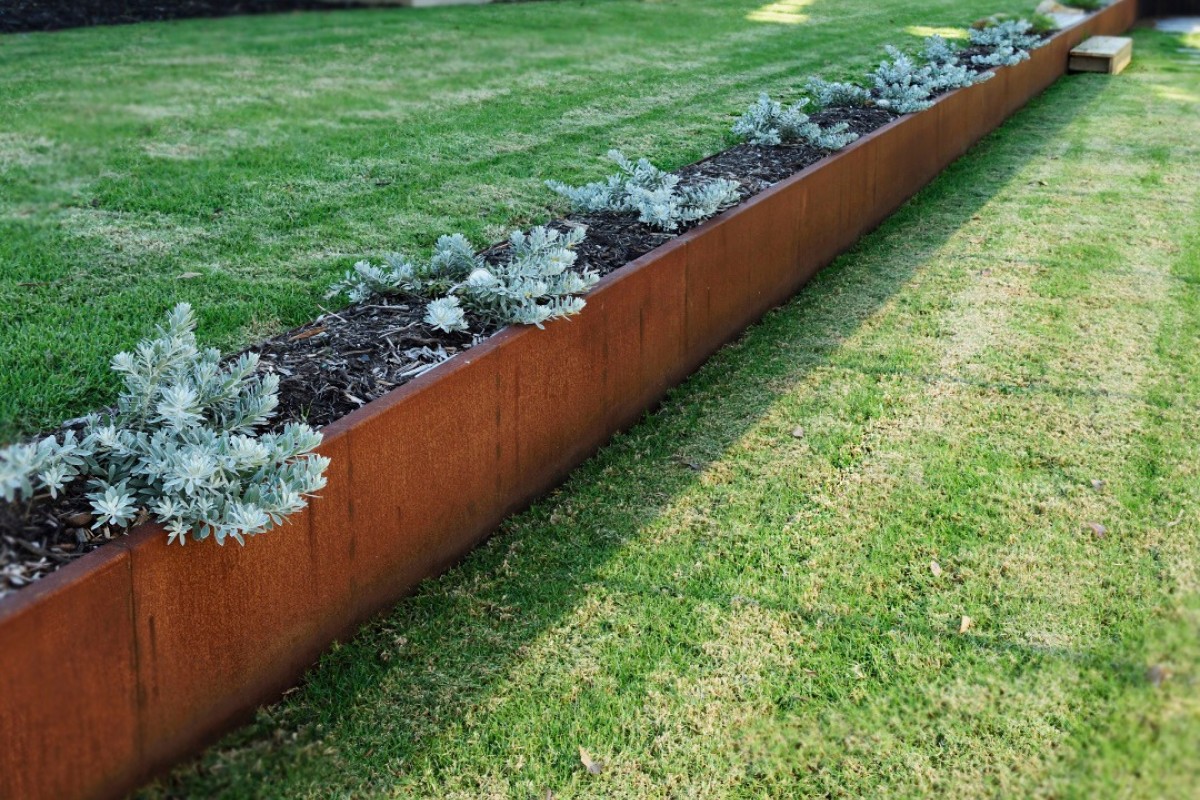
- Long, flowing garden bed borders where consistency of height matters across the whole run
- Curved paths through lawns, especially where the path material is loose (gravel, decomposed granite) that would otherwise migrate
- Around raised beds or planters — particularly where steel planters are already in use, since the edging material can match
- Feature tree surrounds where a clean ring separates mulch from lawn without the ring slowly sinking or splitting
Smaller or tighter spaces can work too, but the visual payoff is most obvious on longer runs where the line reads clearly across the garden.
The practical argument for steel is straightforward. It lasts, it doesn’t require repainting or retreating, and it keeps its position in the ground far better than the alternatives. The aesthetic argument is just as strong — a well-installed run of garden edging in corten or galvanised steel simply looks like it was meant to be there.